15 April 2026
Slow city
Jeonju hanok village day
Now I have seen the hanok village when it is open. In completing my tour I found out that as expected, it is new, with a lot of criticism that from 2007 onwards nearly everything historical was bulldozed and replaced with cafes and souvenir shops. Despite this, and get ready for this amazing claim - "The village was designated as an International Slow City in 2010 in recognition of its relaxed pace of life where traditional culture and nature blend harmoniously". Yes, they are proud of being a slow city. Hard R.
Even better than this, they are not satisfied to just be a slow city, they are the only slow city in the world where the surrounding city has a population greater than 600,000 people. Many signs proclaim this. If you are wondering about slow cities in general, my research tells me that we have 3 in Australia, Goolwa, Katoomba and Yea, all are tiny places and yeah I have been to all 3. And also "Cittaslow is an organisation founded in Italy and inspired by the slow food movement", their logo is a snail. So nothing to do with the usual list making body of UNESCO.
So there you go, that's all you need to know about slow cities.
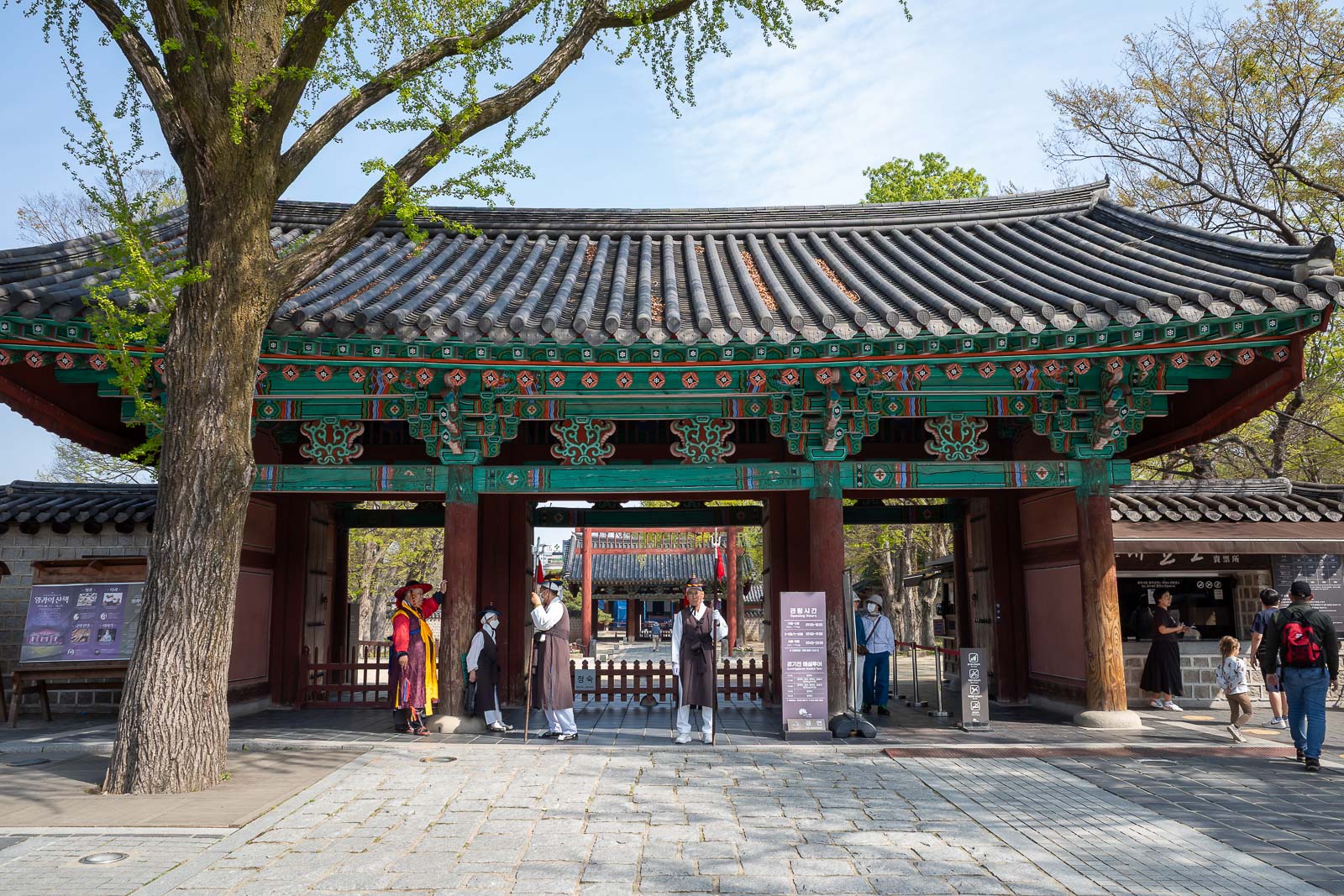
The first site I thought would be historic. Hmmm. It is the royal portrait museum, but also there is a shrine. The shrine is being rebuilt.
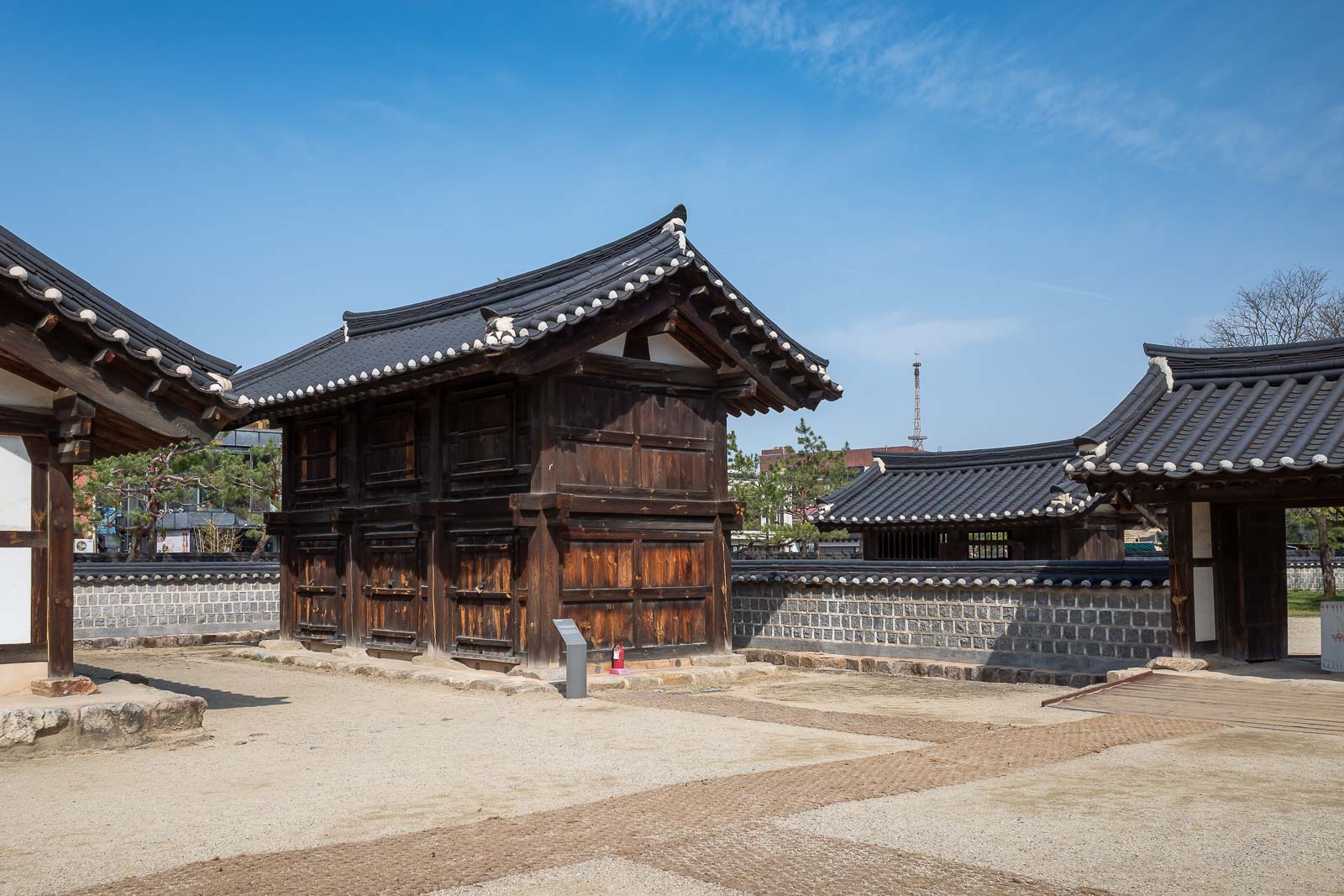
An actual old building in between the newer ones, I think.
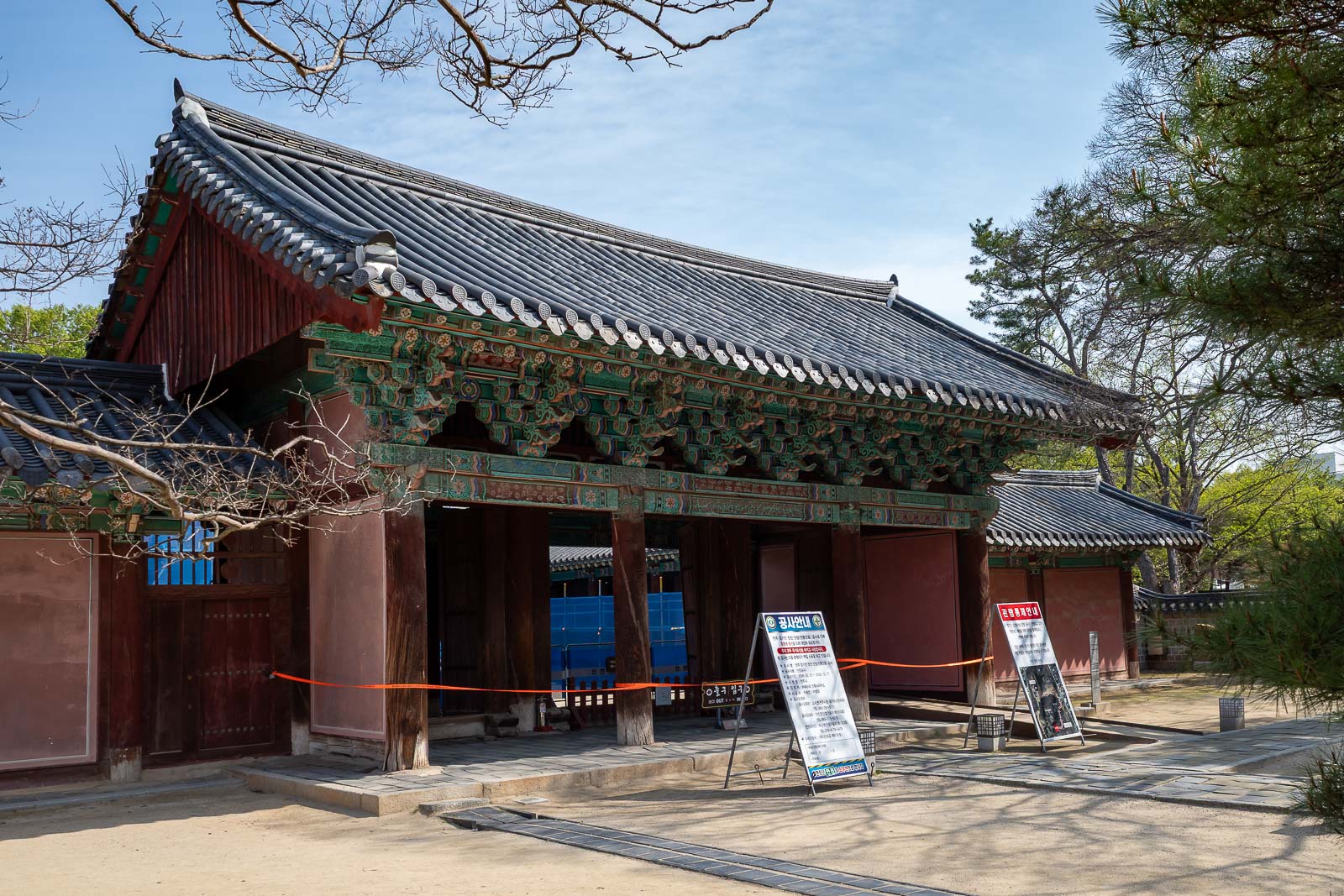
Through there is a historical shrine under construction.
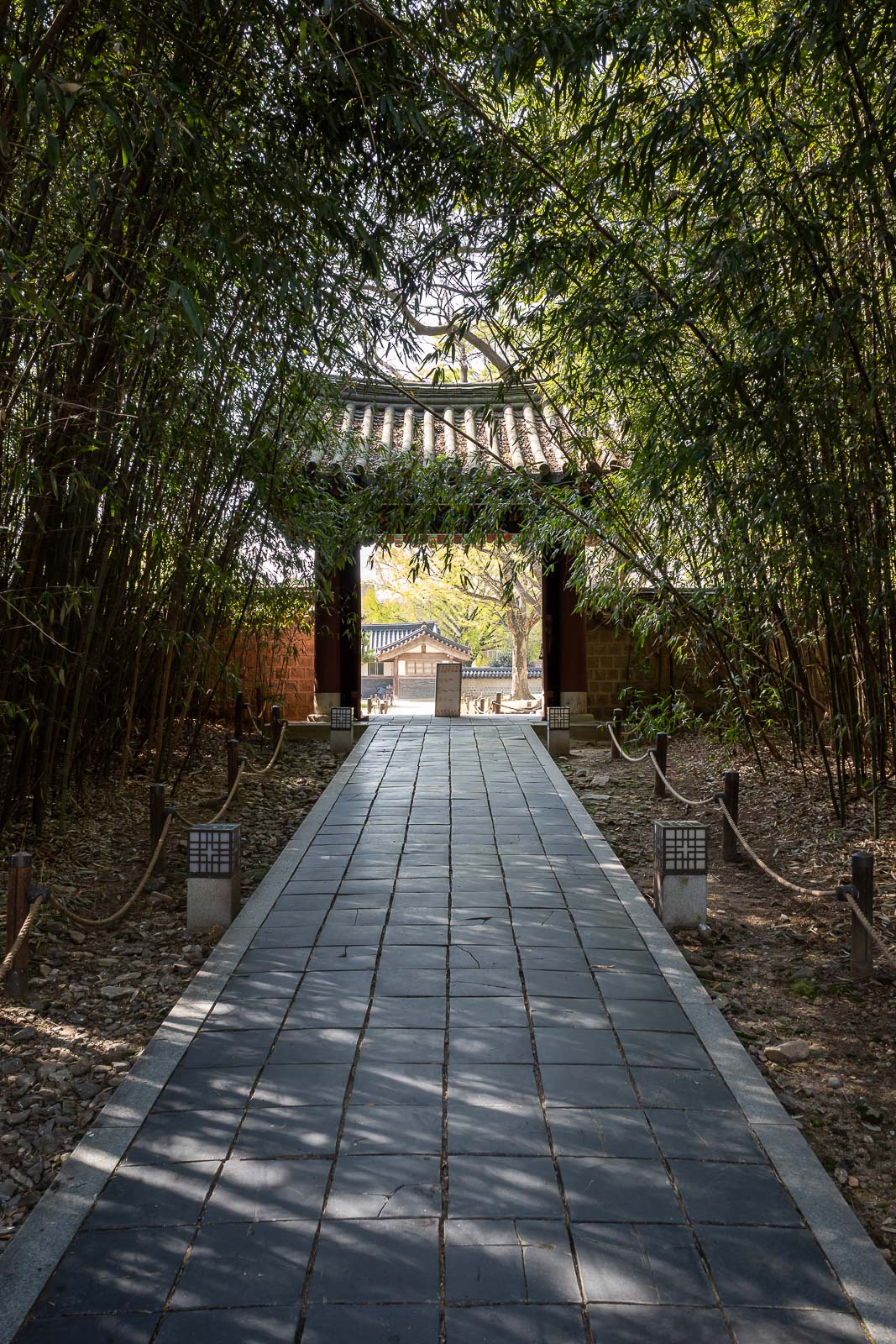
There is some bamboo.
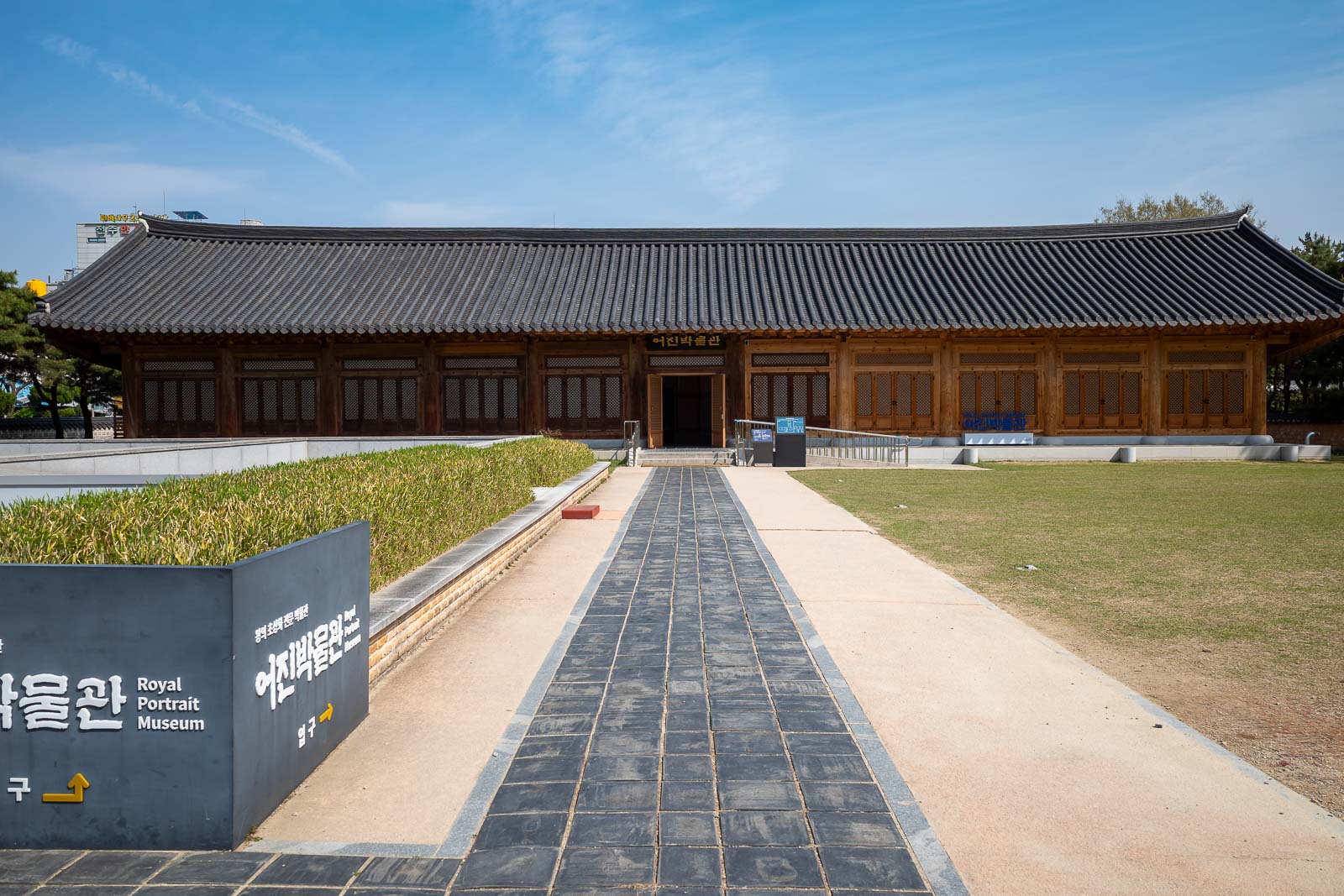
Here is the actual royal portrait museum, most of it is underground. I should mention that there is an entry fee of about $2.50.
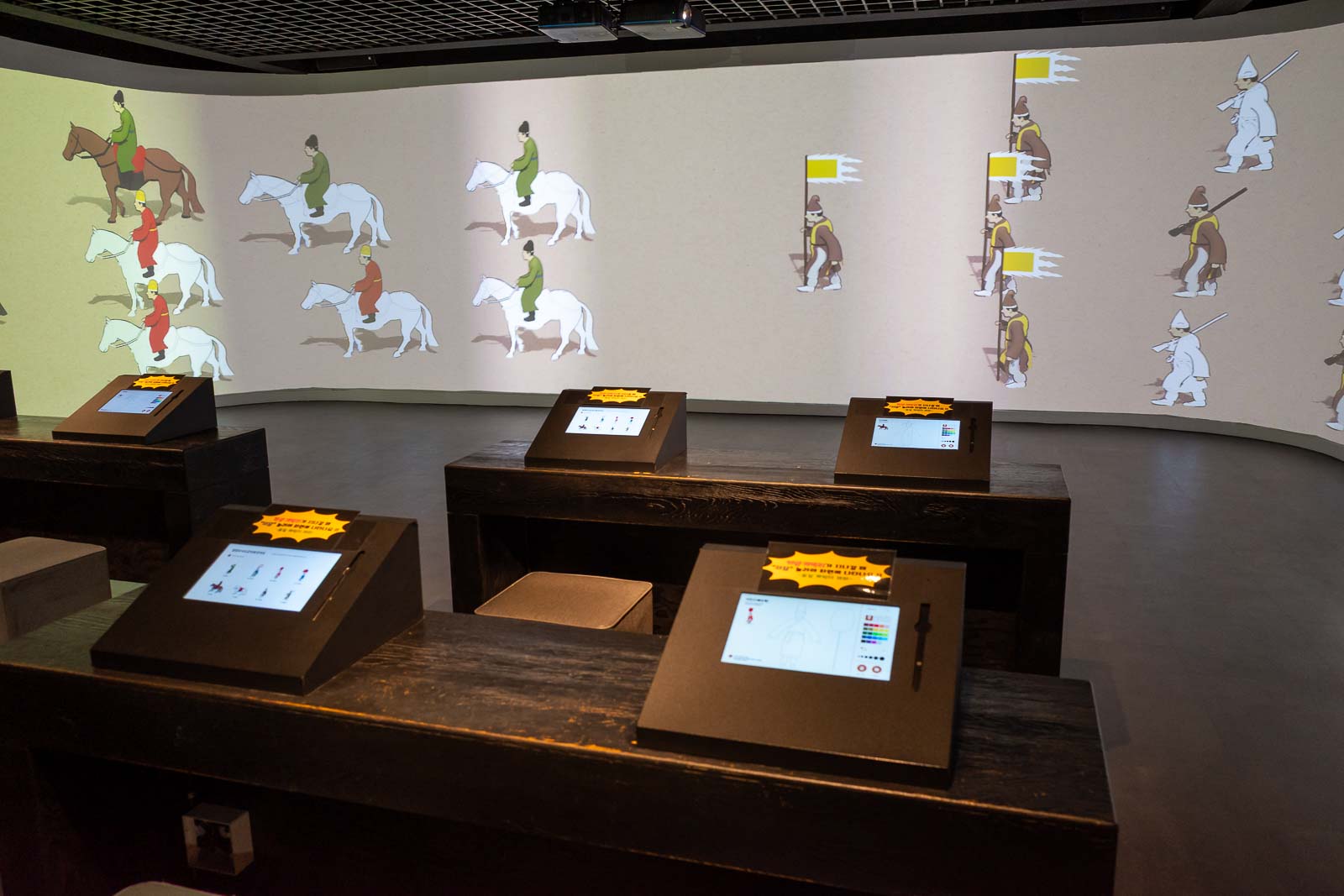
The royal portraits seem to involve ms paint and projectors. Most of the actual portraits were drawn in about 2007 when the slow city movement started.
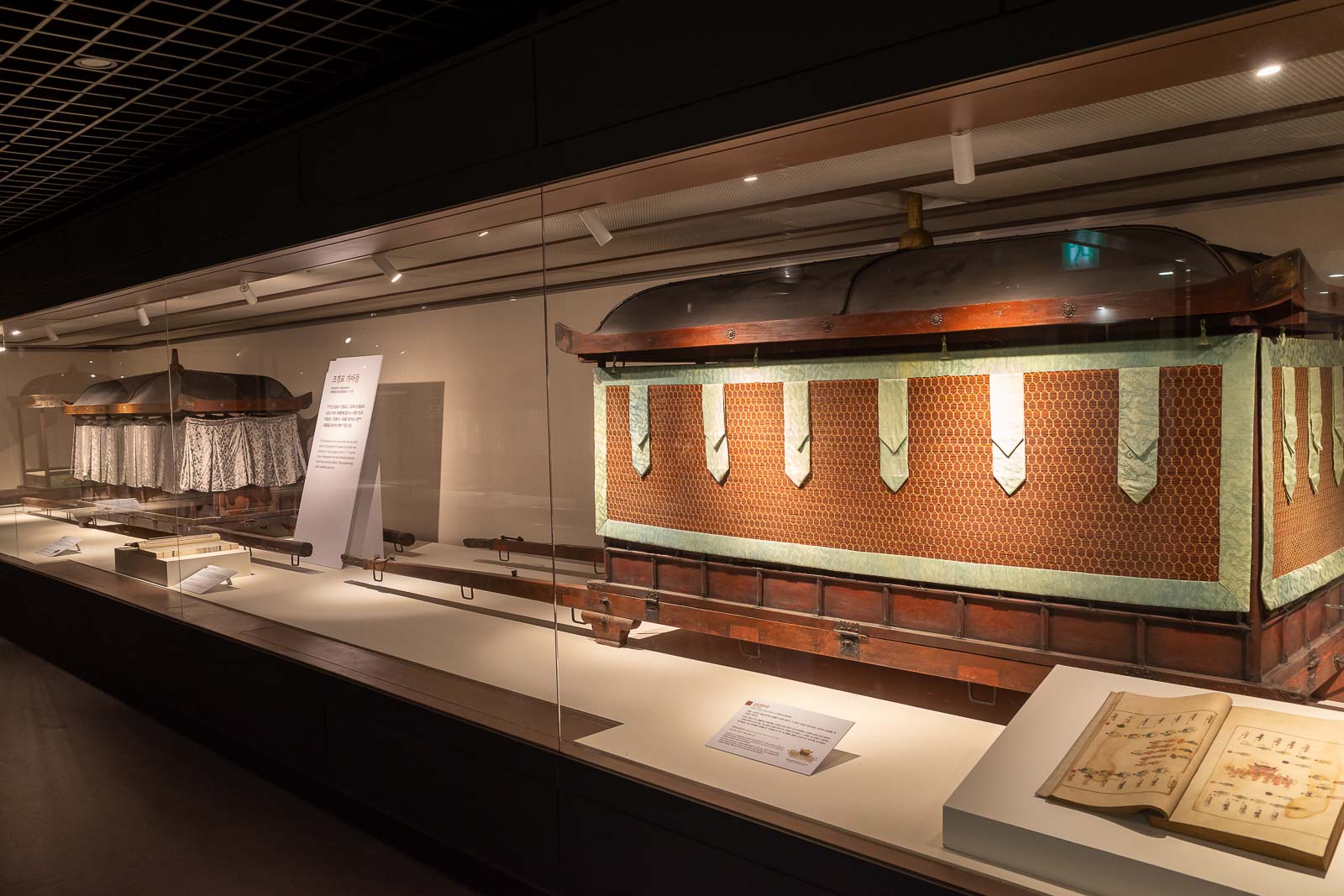
These wheelbarrows are re-creations of the actual wheelbarrows that were used to transport the real royal portraits, I think.
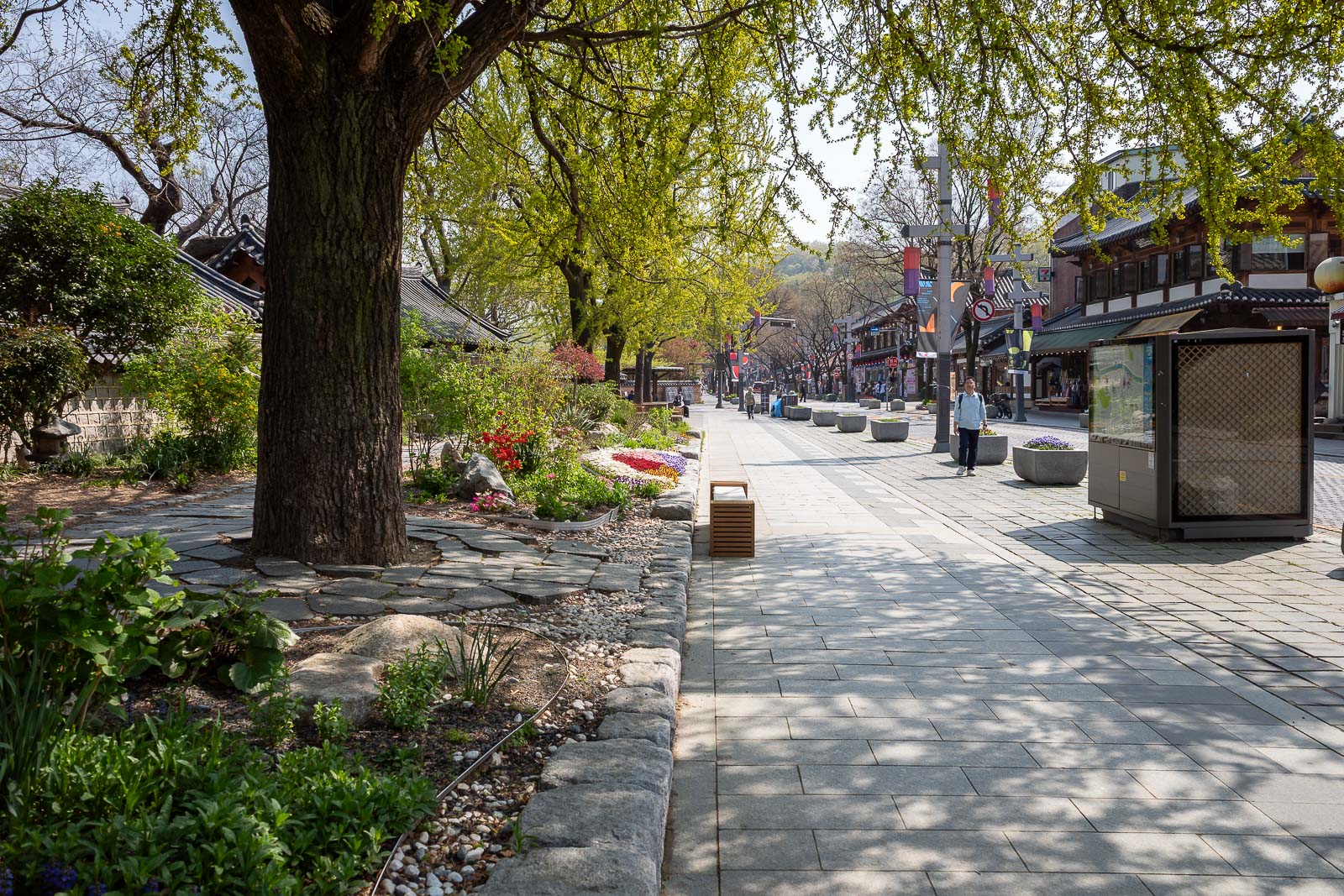
Back at the main street through the hanok village, and it is hot with bright sun today. I got burnt.
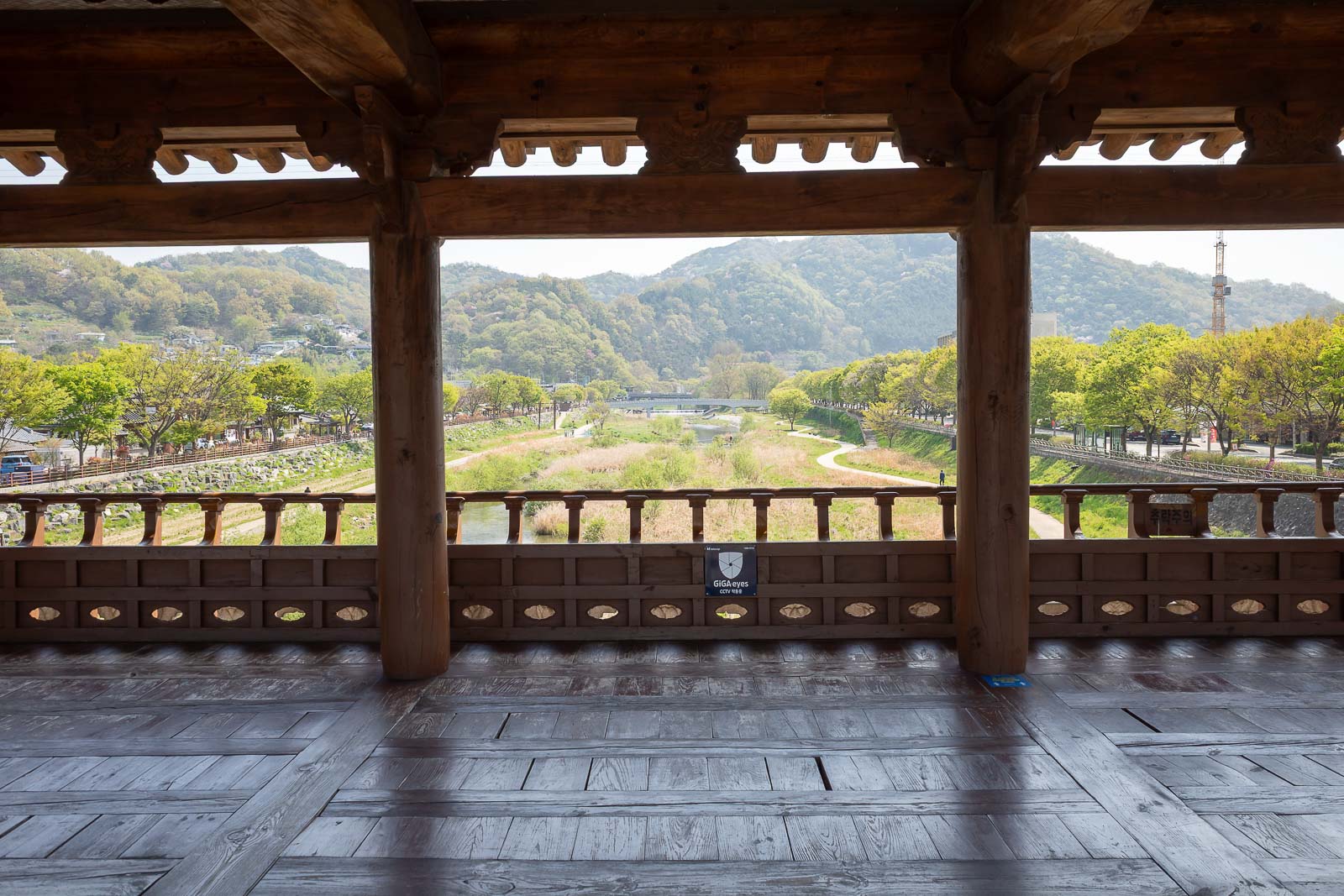
Nearby is a covered bridge, just like Madison county. You will see it again shortly.
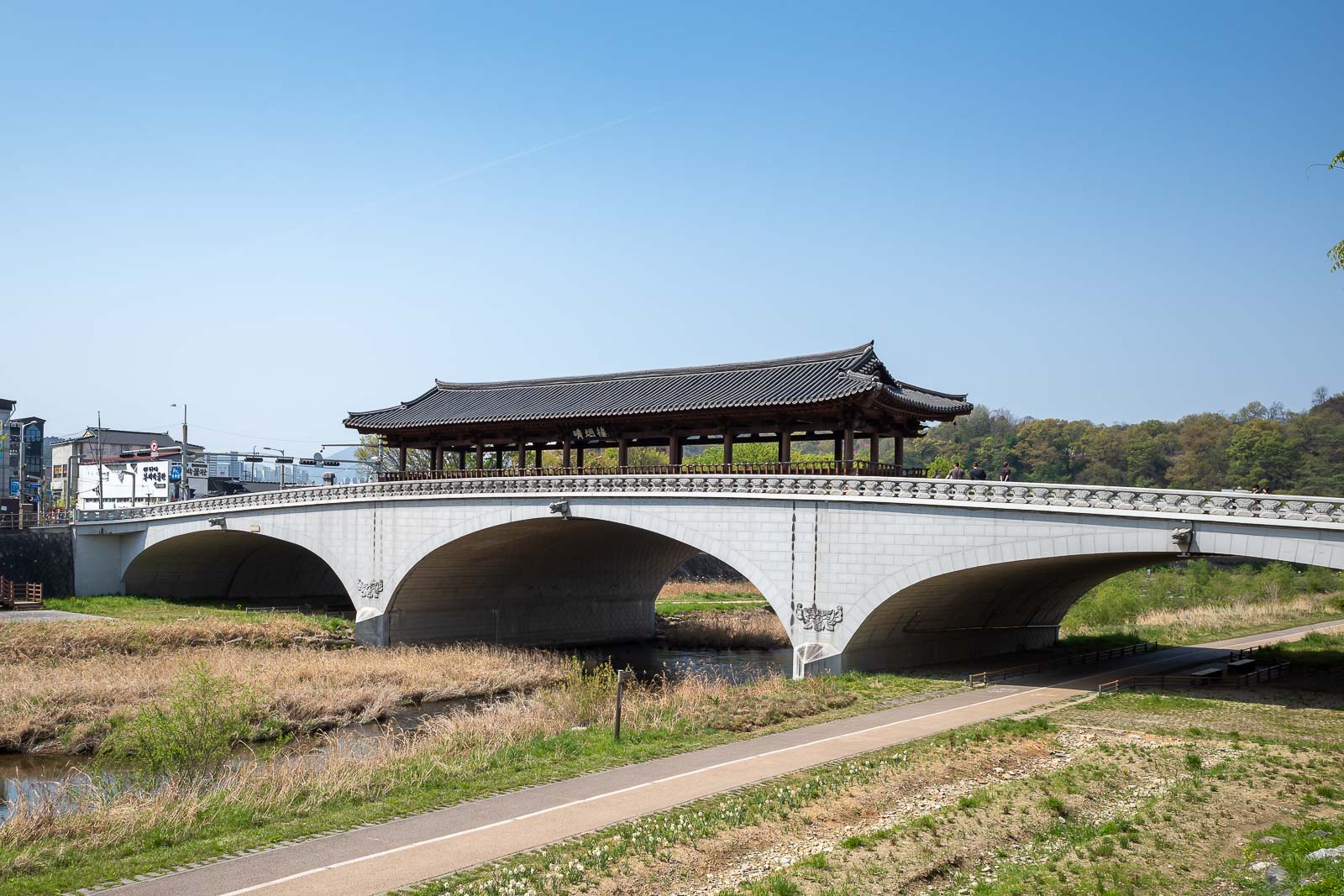
Behold, I think it is new.
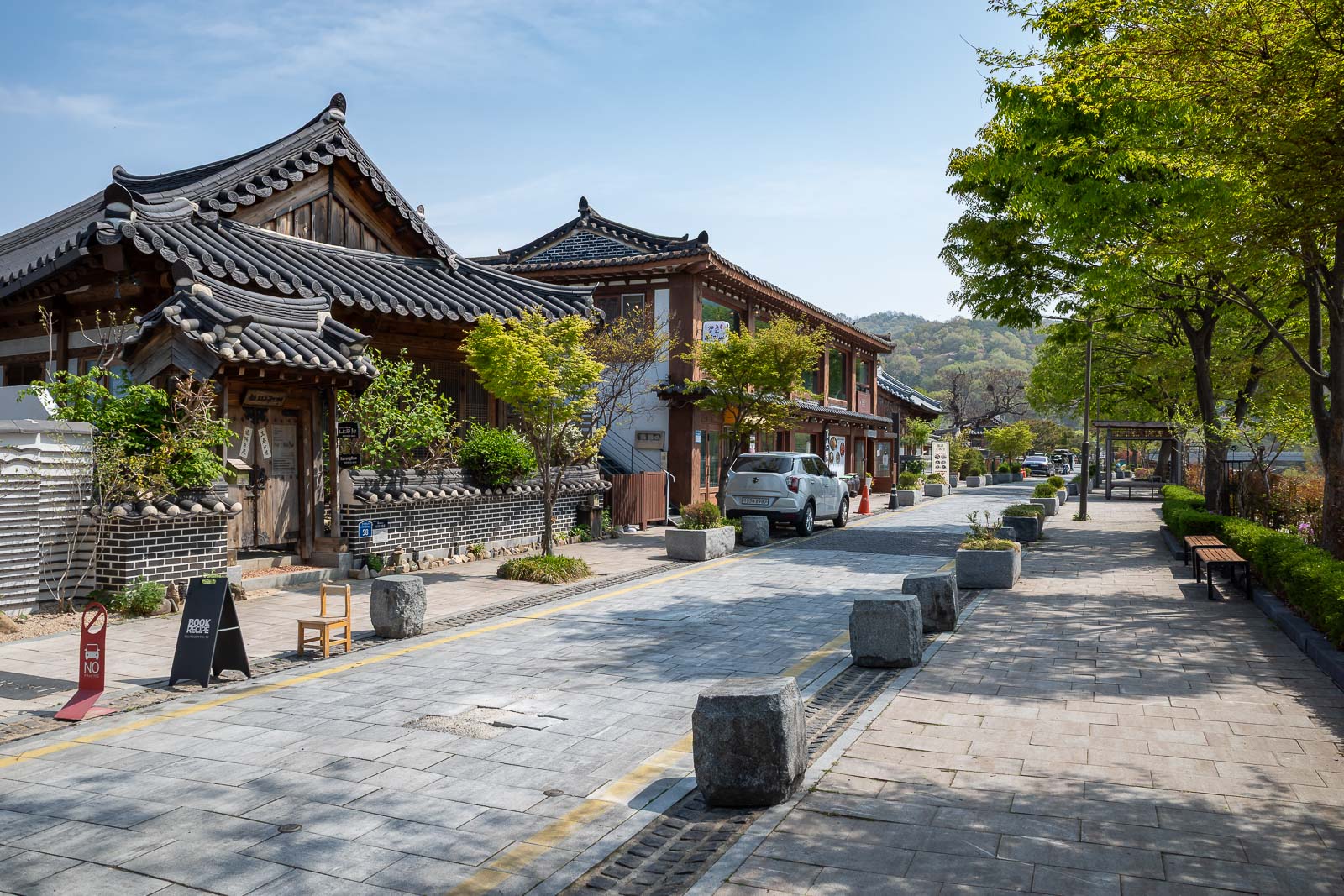
All the streets are nice and touristy.
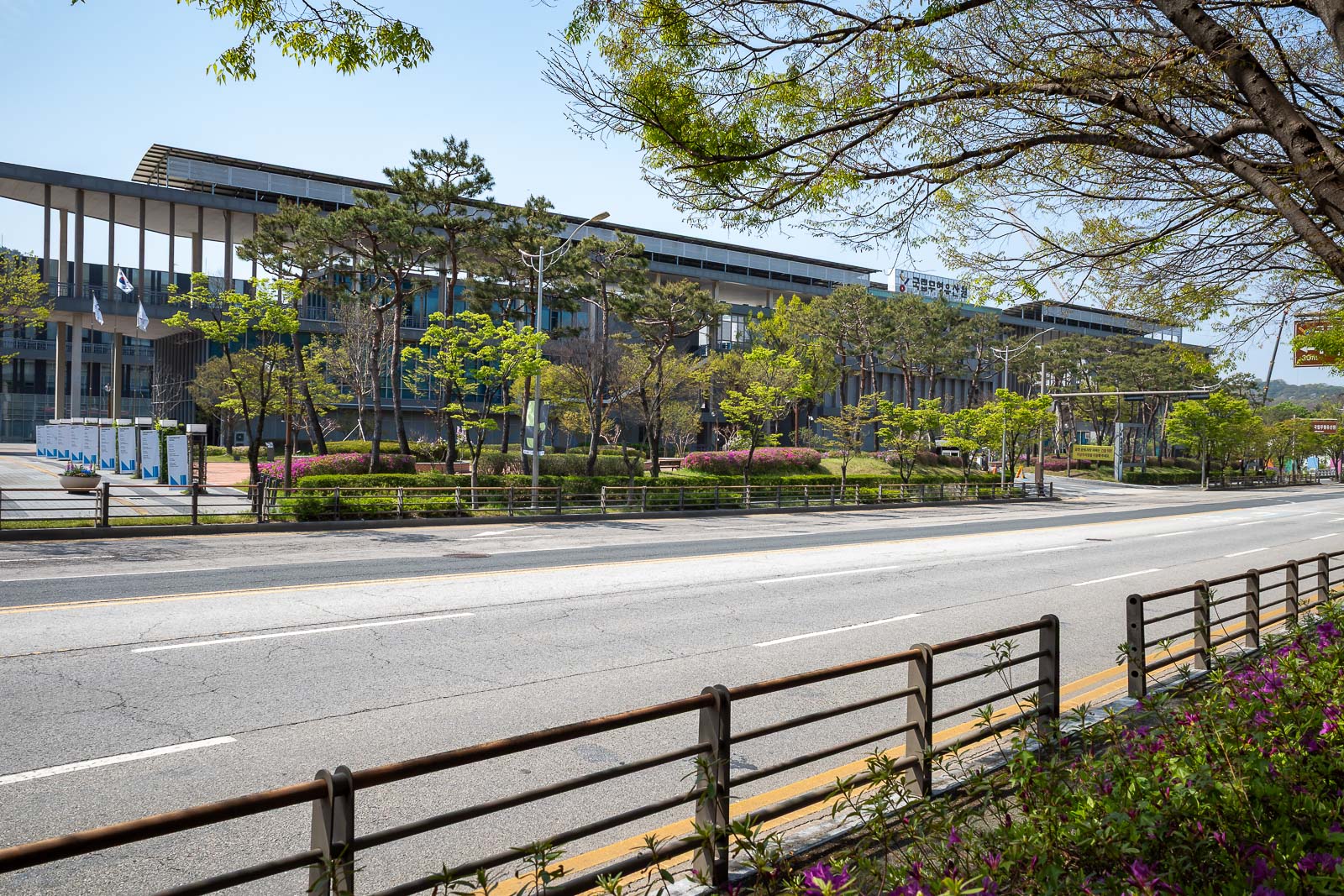
This is the rather uninspiringly named, national intangible heritage centre. Mainly hanboks I believe.
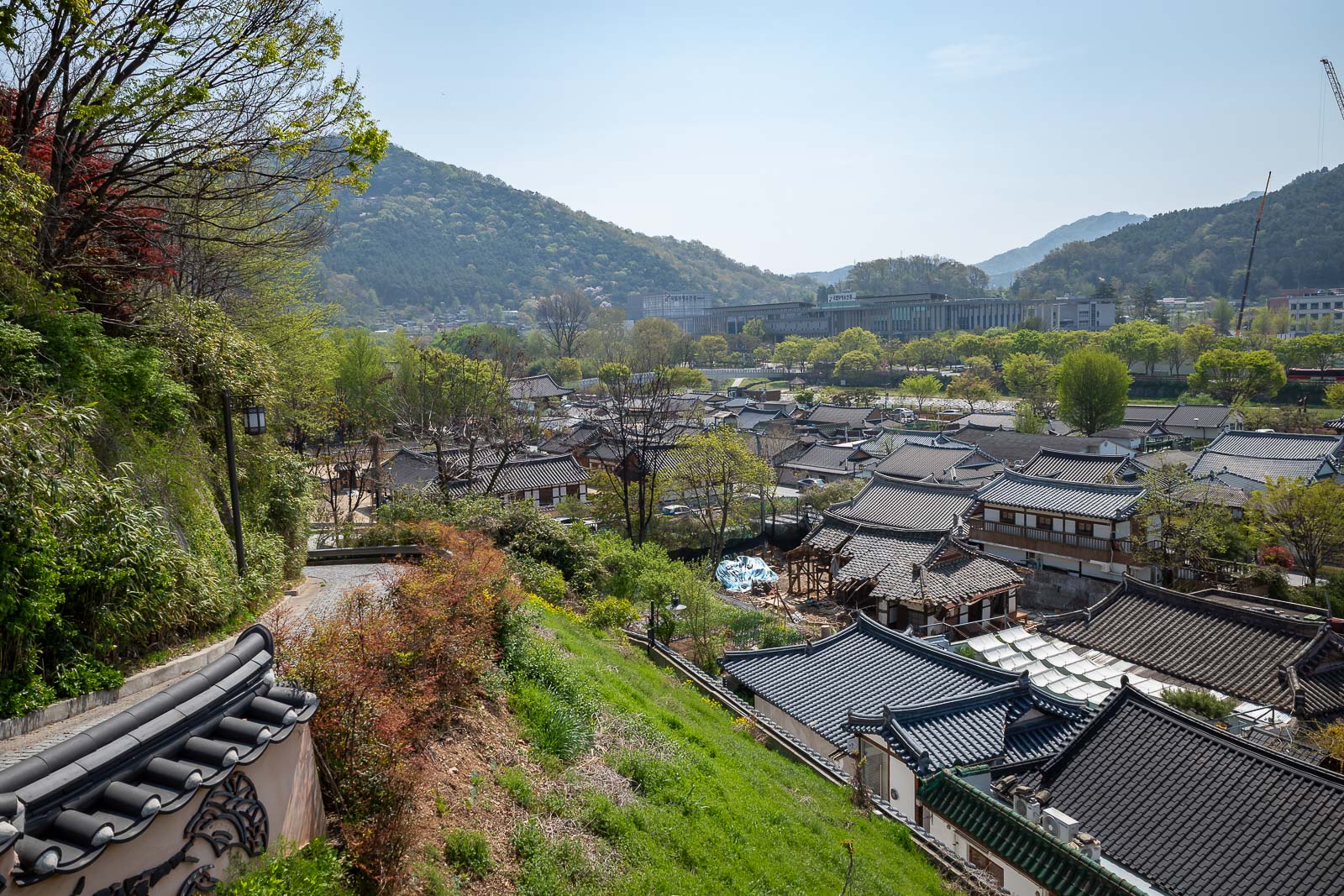
If there is a hill to climb up, I will find it.
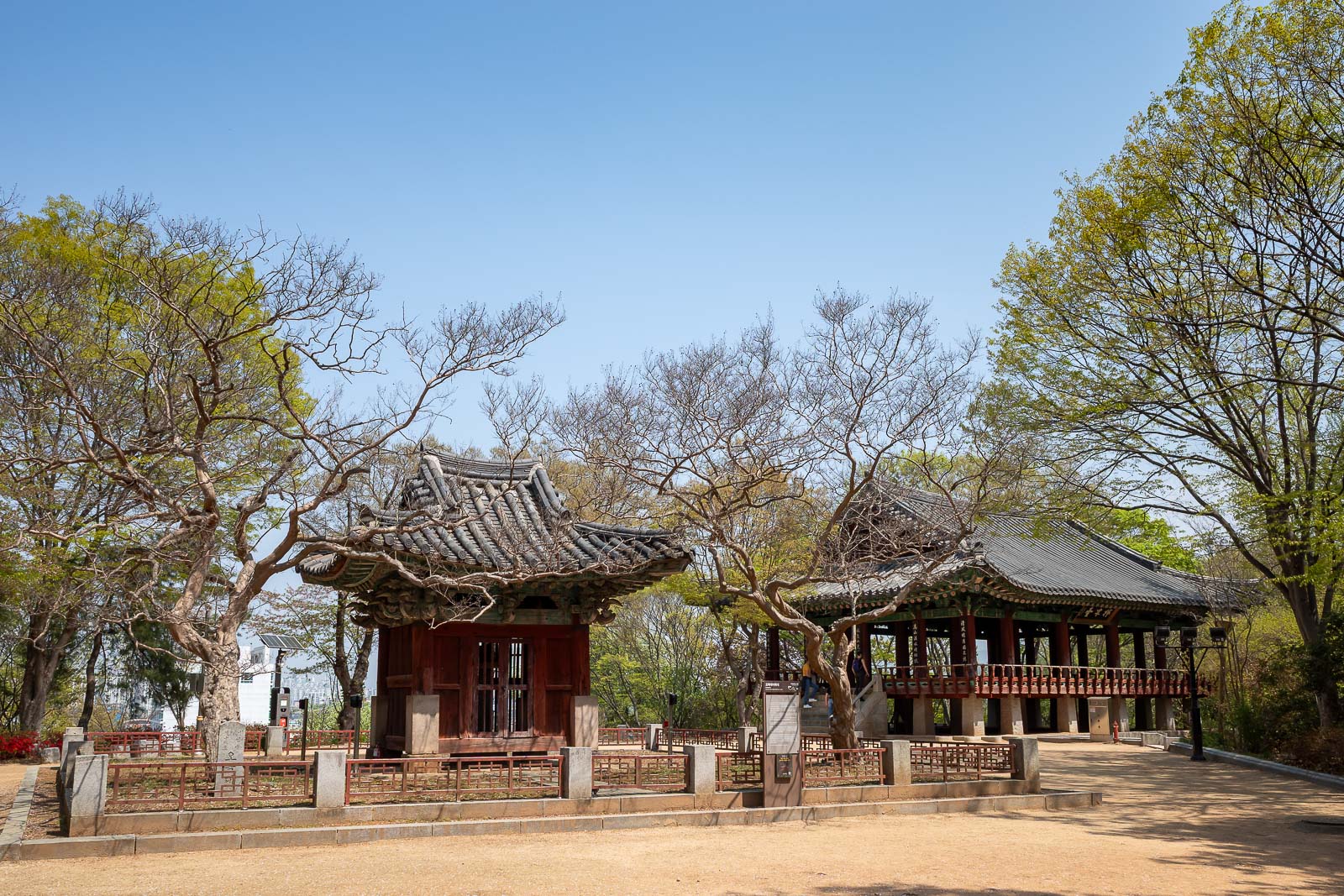
On top of the hill is something actually old, they ask you to take your shoes off if you want to walk on it, Omokdae appears to be it's name.
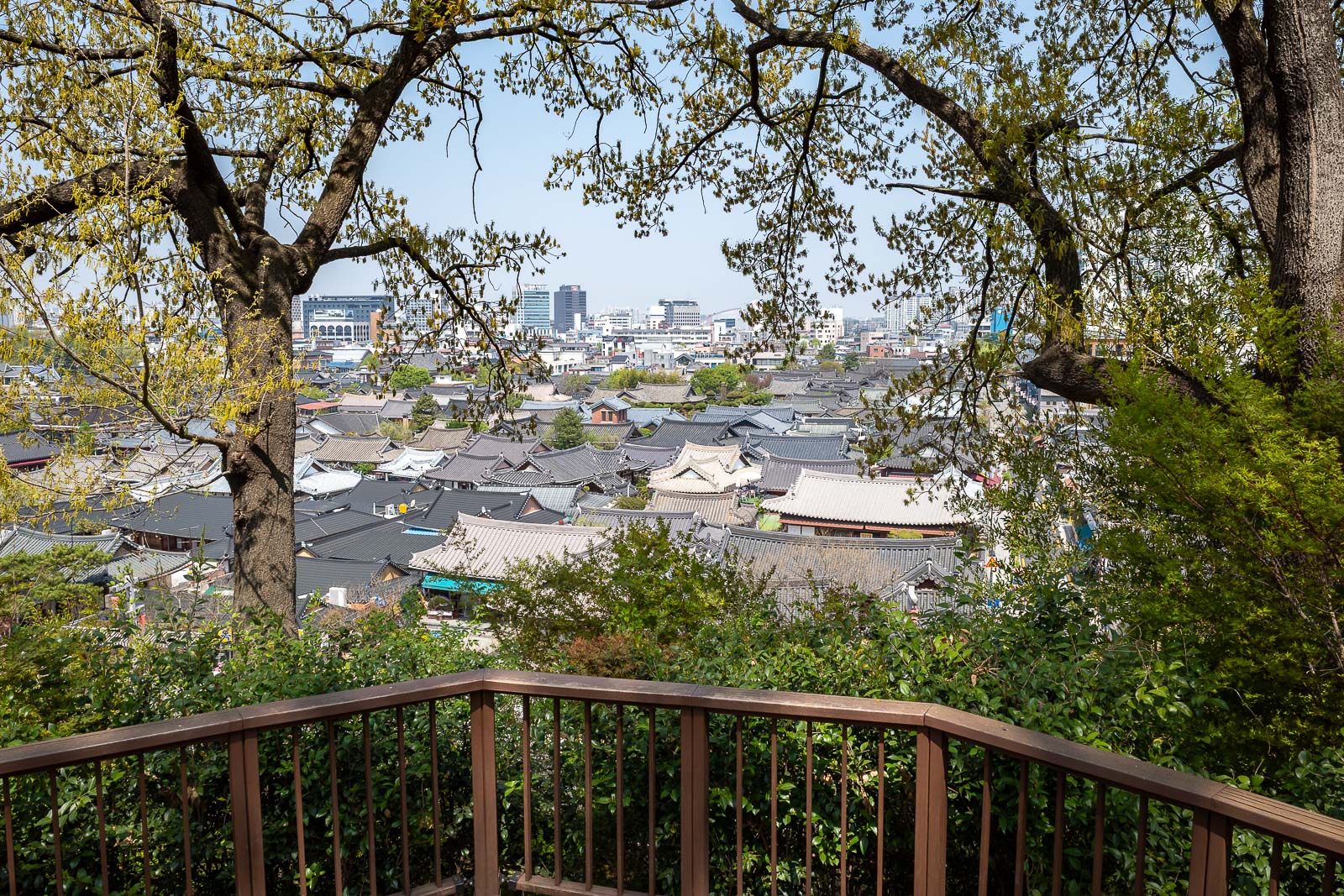
View of hanok roofing methods.
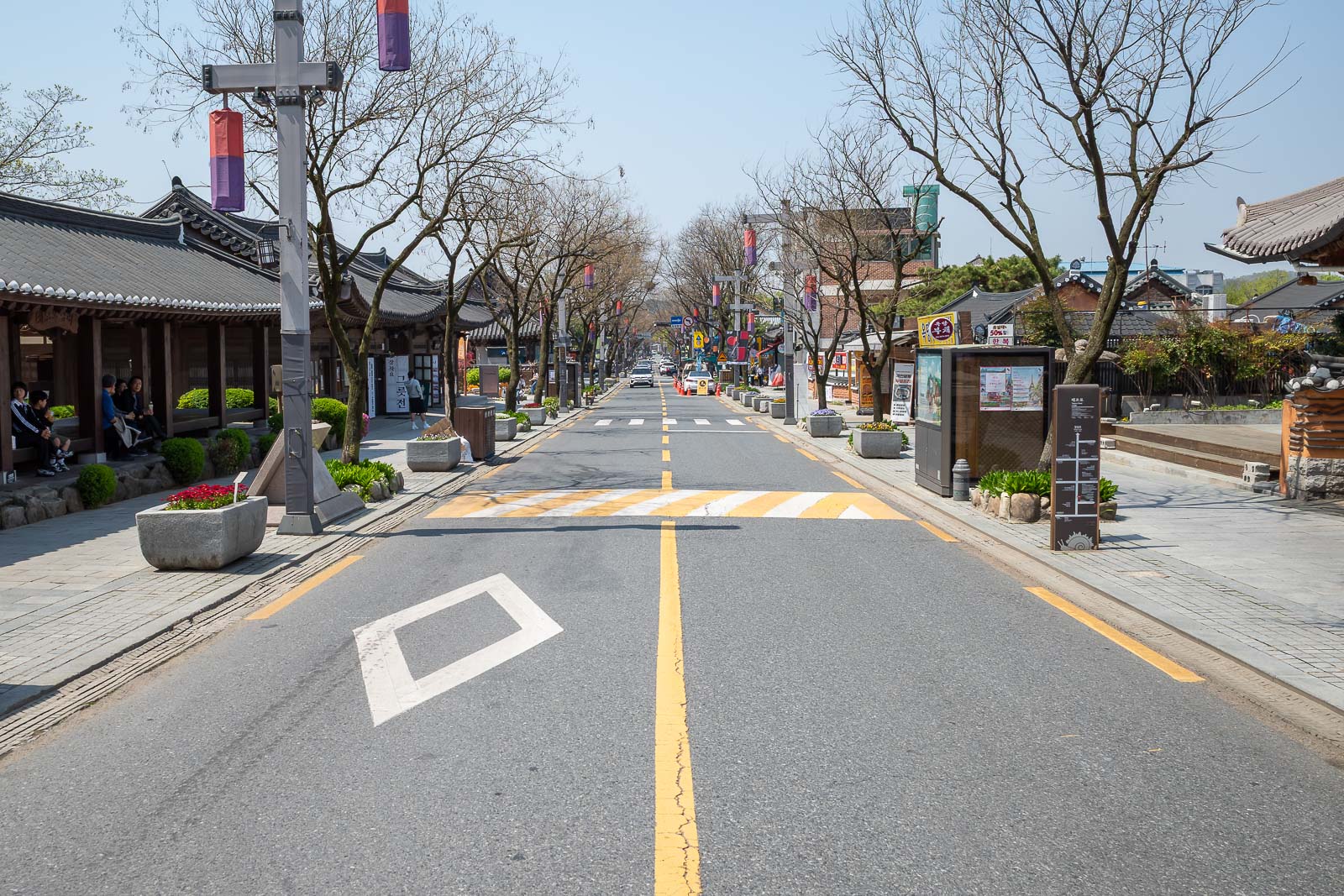
Not too busy yet even at lunch time, some cafes only open after lunch.
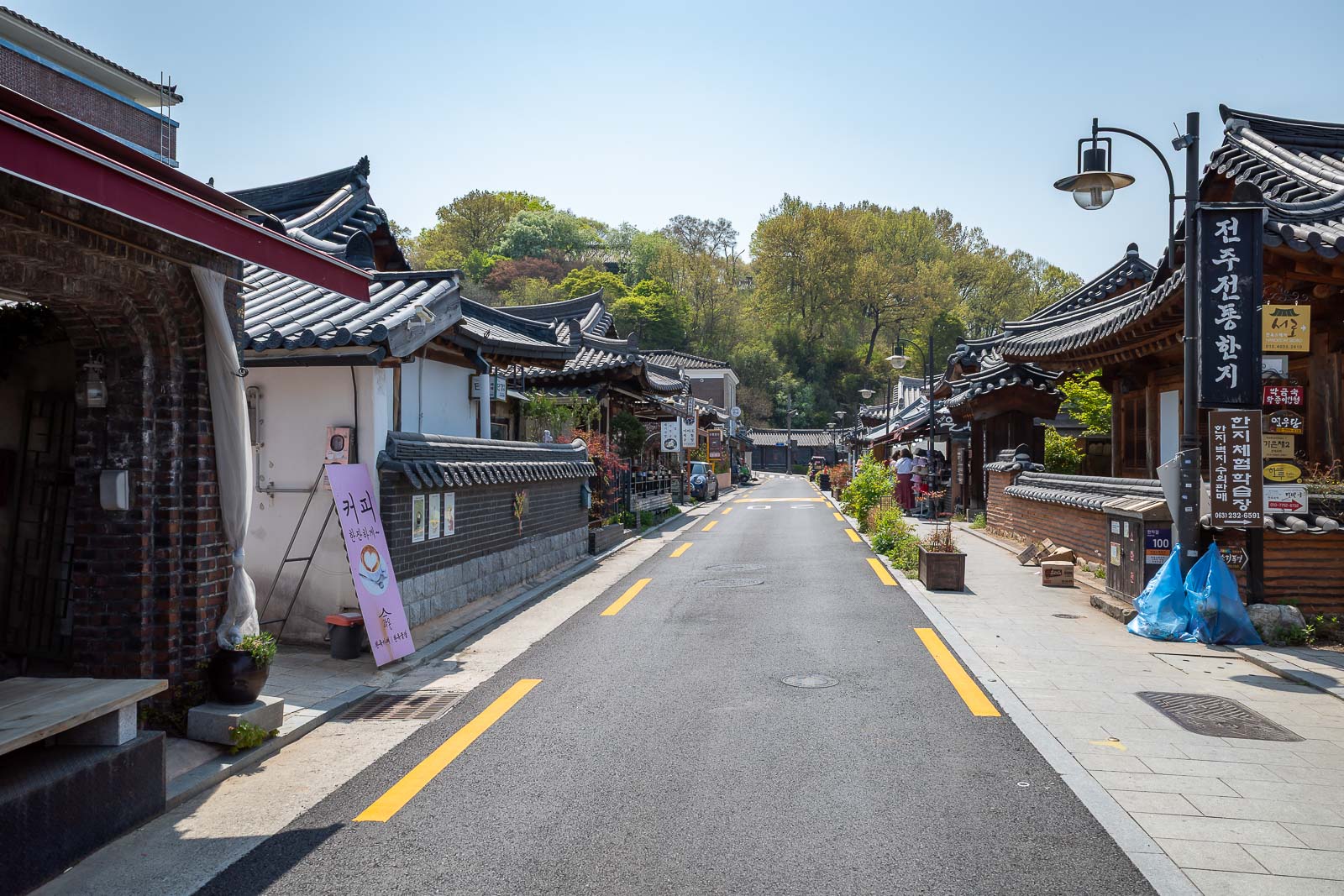
Most of the streets are full of air bnb's, apparently Jeonju is the 3rd most visited city in Korea after Seoul and Busan, all because of this snail certified area.
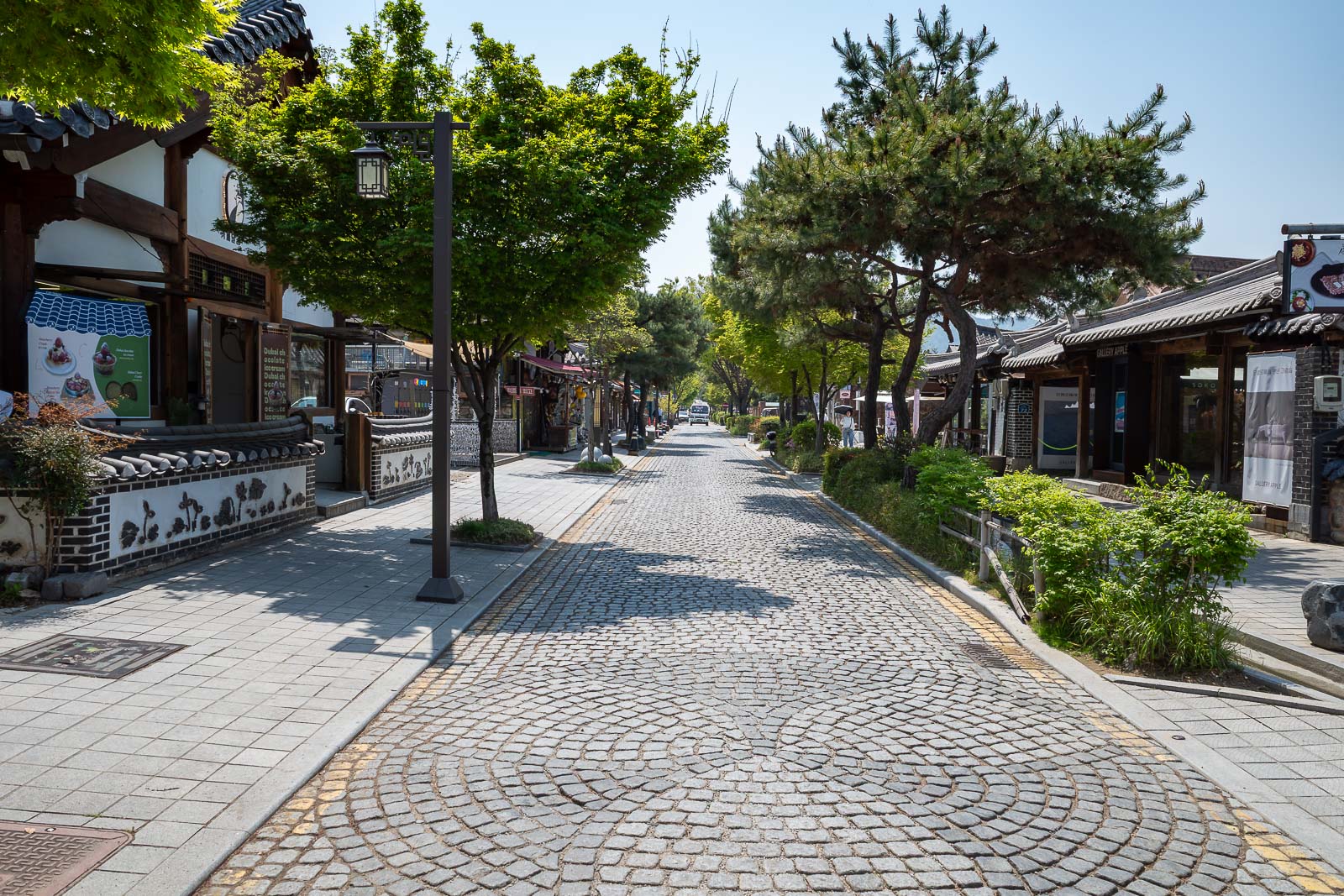
There are many places to get an ice cream.
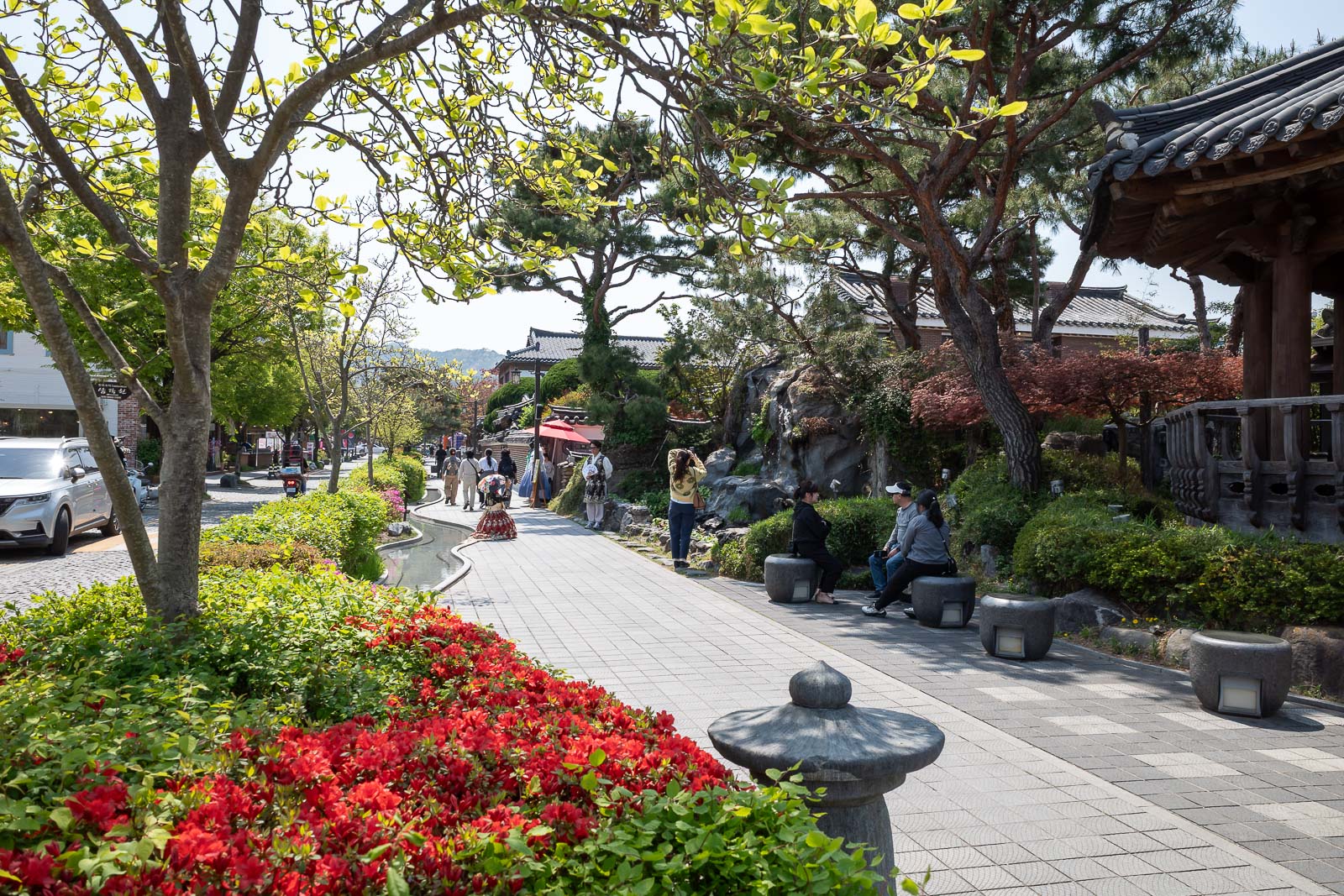
All the streets are well manicured.
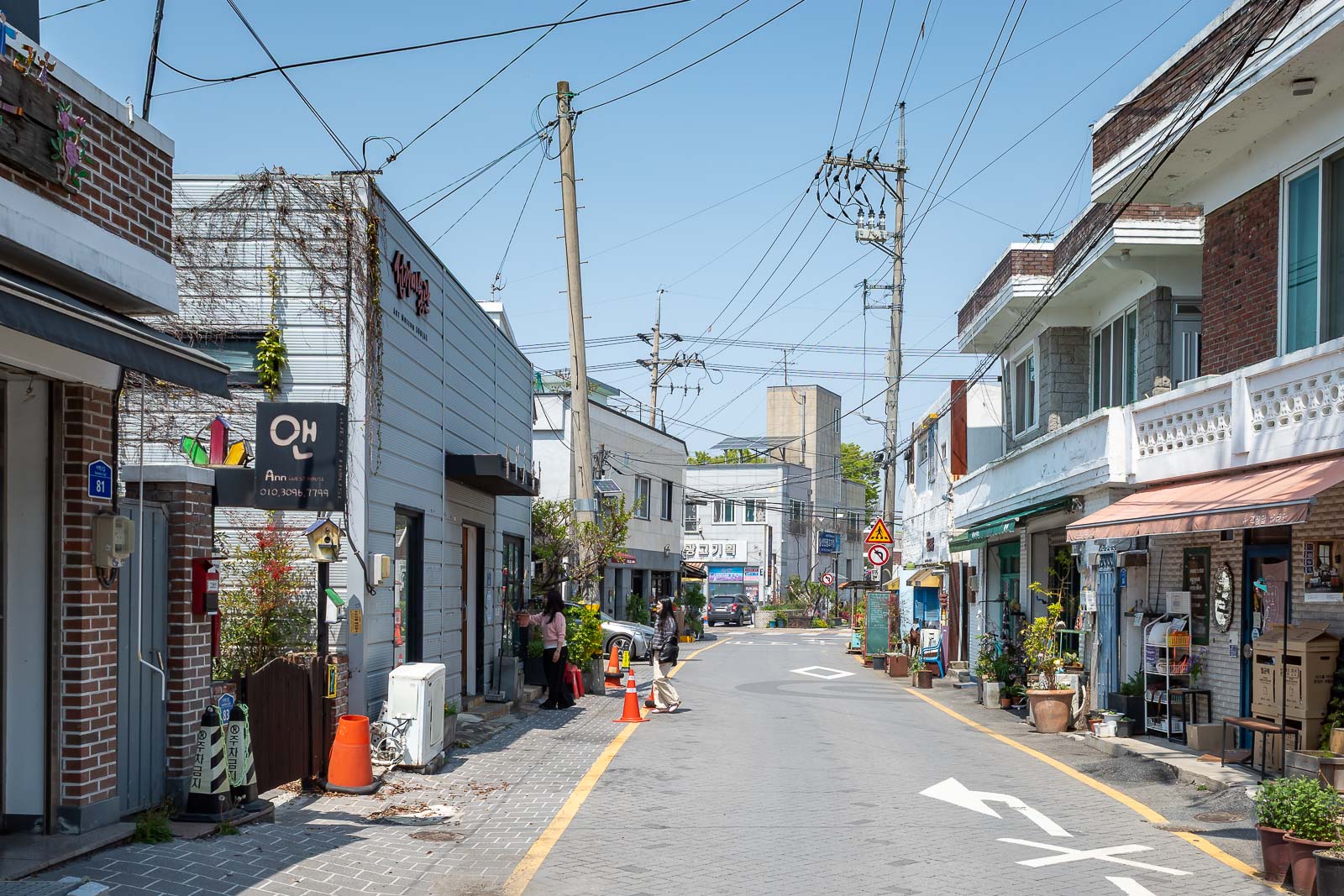
Just over the river is the heavily advertised, Seohakdong Art Village. This is a bit hard to photograph, but there are a lot of places selling hand made ear rings and related things tourists need.
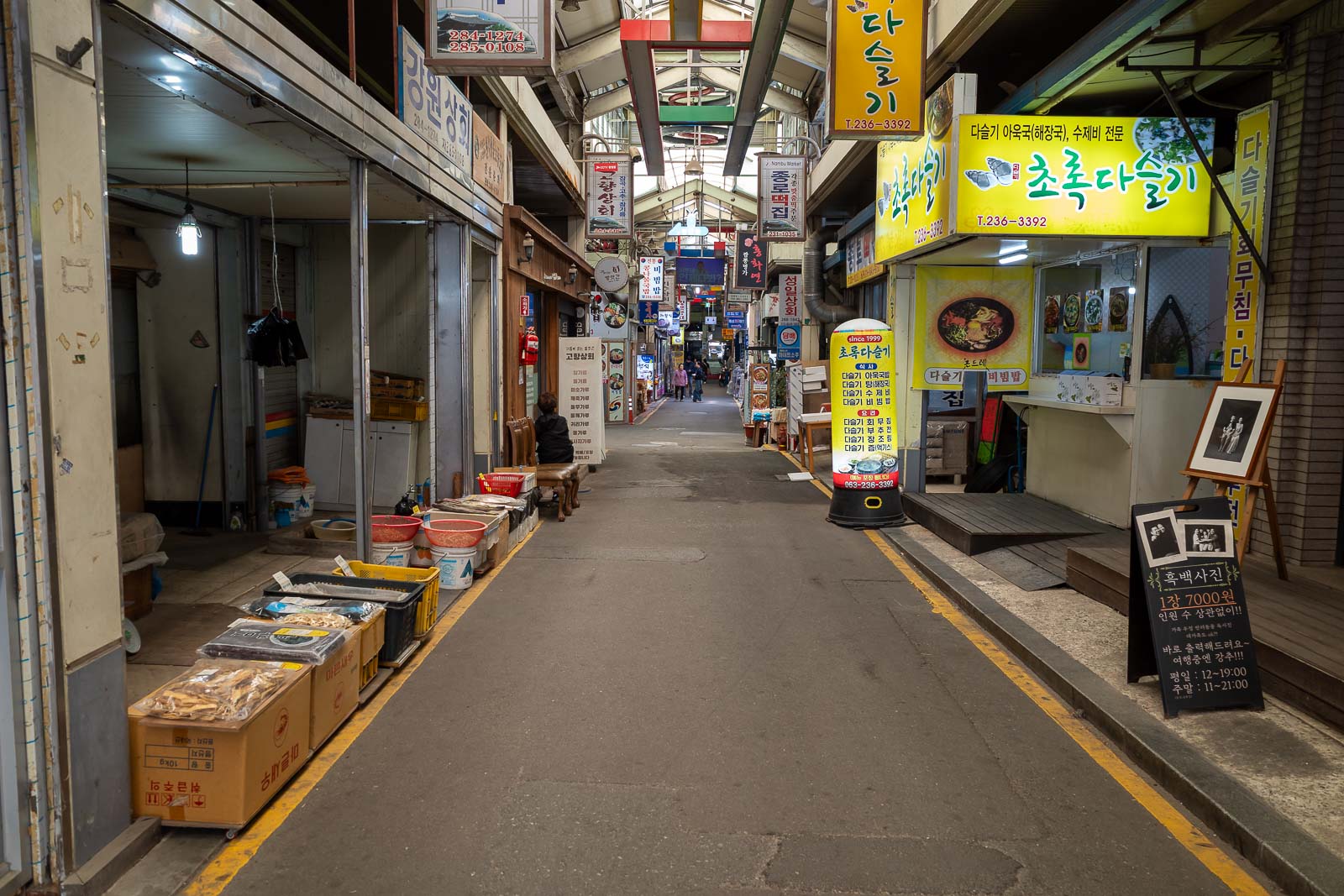
My last stop of the day, the also nearby Nambu market. A strange mix of new and old. There were some rather modern cafes, and a youth zone.
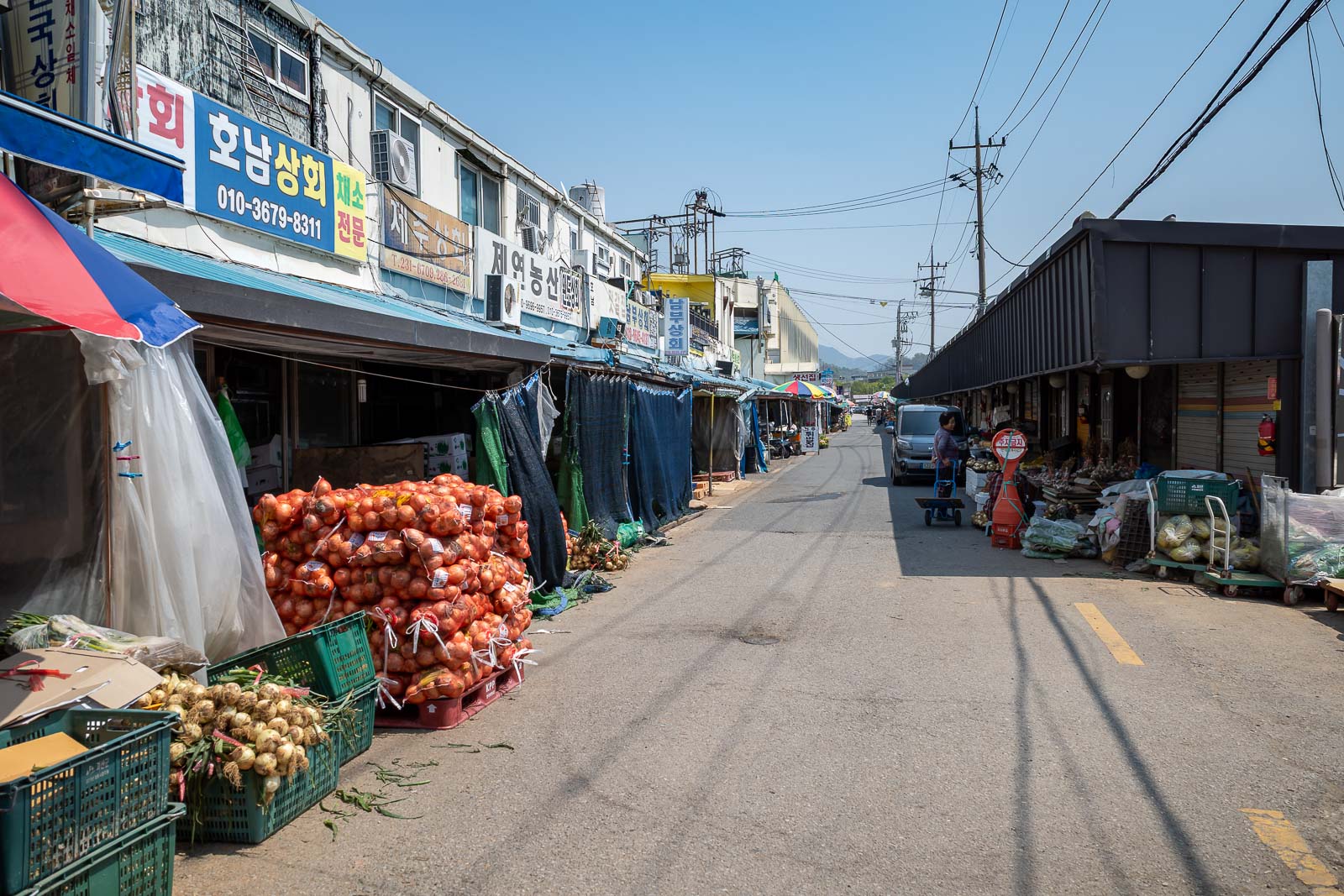
But also the traditional Korean style market where leafy produce bakes in the sun next to pig heads.
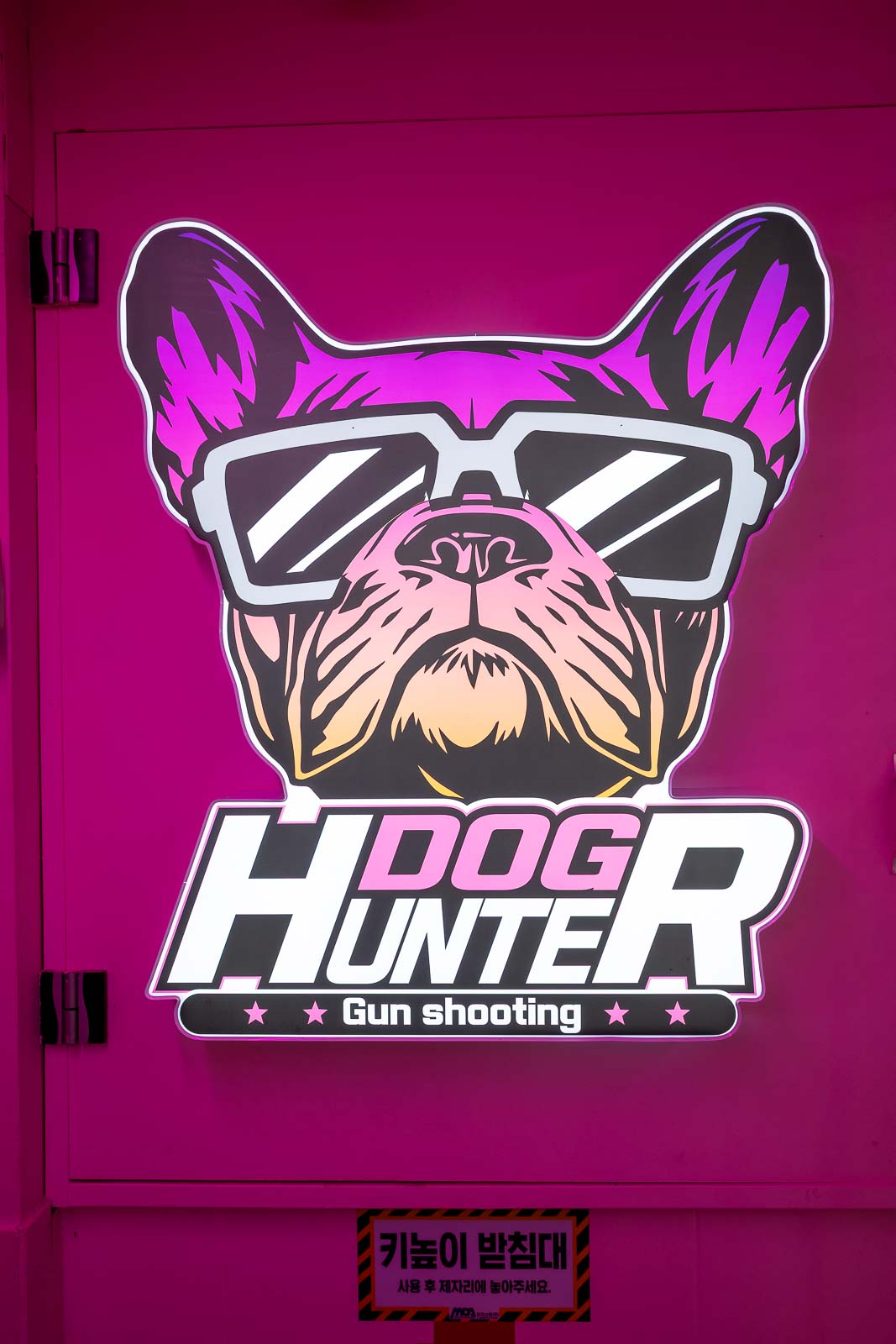
Then I shot a few dogs and decided I had seen enough.